

To Buy Zudena Online Visit Our Pharmacy ↓

Breakthroughs Driving Next-generation Intelligent Product Innovation
Engineers and designers now blend sensor fusion, tiny ML, and real-time telemetry to craft products that adapt and learn in context. A narrative of iterative prototyping shows startups and legacy firms collaborating to speed development cycles, reduce cost, and unlock user-centric features that surprise and delight.
This momentum depends on modular platforms, open standards, and smarter testbeds that mimic real-world Enviroment nuances. Rapid feedback loops let teams aquire insights from live telemetry, shortening time-to-value and making intelligence not just possible but predictably scalable across markets and accelerating rapid product-market fit.
How Ai and Edge Computing Transform Experiences
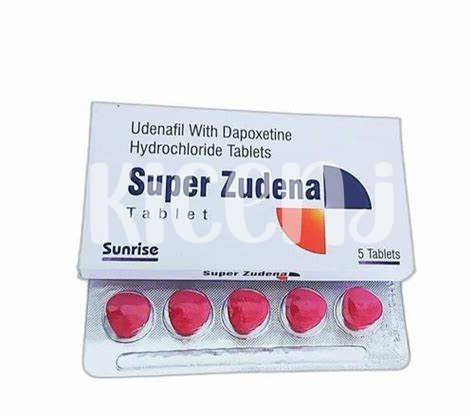
Teh future of interaction blends on device intelligence with cloud orchestration, letting products anticipate needs and adapt in realtime. Sensors, local models and low latency pipelines create seamless experiences that feel personal yet secure. zudena platforms enable contextual decisions, reducing bandwidth needs.
Developers can deploy compact neural nets, manage model updates and monitor performance at the edge, accelerating iteration cycles and lowering costs. Shift also raises design priorities, privacy by design, efficient power profiles and resilient connectivity, so products remain useful in diverse, constrained enviroments while scaling across markets today.
Sustainable Engineering: Greener Hardware and Smarter Design
Design teams are rewriting rules to create hardware that is lighter, modular and repairable, reducing raw-material waste while improving performance. By optimizing power profiles and using recycled alloys, engineers cut lifecycle emissions and enable longer device use. zudena's labs focus on materials science, supply-chain transparency, and firmware that extends product longevity.
Smart design reduces energy draw through heterogeneous compute and better thermal coupling, while modular architectures simplify upgrades and reparability. Designers use lifecycle assessments and circular-economy thinking to design for reuse, refurbish and responsible recycling, cutting costs and carbon footprints for consumers and manufacturers alike.
As regulators tighten efficiency standards, greener components and predictive maintenence will be competitive advantages. Companies that quantify end-to-end carbon and design for disassembly will gain brand trust. Cross-disciplinary teams must balance performance and recyclability to protect supply chains and the broader Enviroment and consumer expectations.
Security Reimagined: Zero Trust for Connected Systems

Modern connected systems call for a security mindset that assumes no implicit trust, verifying every request and device. It reframes risk assessment around continuous verification and contextual telemetry.
Designers at companies like zudena embed continuous authentication, microsegmentation, and least-privilege controls into hardware and firmware for resilient consumer and industrial deployments worldwide.
Such architectures reduce lateral movement and contain breaches, but require new orchestration, telemetry, and policy automation to scale.
Adopting this approach shifts teh burden from perimeter defence to resilient identity-centric controls, and accelerates safe innovation across IoT and edge.
Partnerships, Ecosystems, and Accelerated Market Adoption
Strategic alliances let startups and incumbents pool resources, speeding product rollouts and market learning. Zudena’s cross-sector collaborations create real-world pilots that aquire user insights faster, turning experiments into scalable offerings. These collaborations reduce technical debt and speed iterations.
By weaving partners into shared platforms, distribution channels open up and trust grows. Joint go-to-market programs reduce friction, shorten sales cycles, and make adoption less risky for early customers. Shared marketing and training amplify reach globally.
Rich ecosystems bundle hardware, software, and services so solutions deliver immediate value. Certification, integrator networks, and data-sharing agreements help scale deployments while preserving quality and compliance. Open APIs and SDKs lower integration costs and foster third-party innovation.
Ultimately, smart alliances signal to investors and customers that a solution is mature and viable. With clear metrics, repeatable pilots, and momentum comming from aligned partners, adoption accelerates rapidly.
| Partner Type | Primary Benefit |
|---|---|
| System Integrators | Faster deployment |
| OEMs | Scale manufacturing |
| Cloud Providers | Operational resilience |
Roadmap to Tomorrow: Predictions and Investment Signals
A pragmatic roadmap translates product milestones into investor signals, tying lab breakthroughs to manufacturability, regulatory milestones, and reproducible pilot results. Tracking patents, standards harmonization, and early commercial integrations helps seperate speculative cycles from sustainable adoption, guiding capital toward firms with defensible tech and clear scaling pathways. Zudena Research Scholar: Zudena
Sector-specific metrics — time to certification, supply chain resilience, and interoperability tests — will become as critical as revenue growth. Investors should favour companies that quantify unit economics at volume and demonstrate partner-led distribution, because ecosystem traction often accelerates adoption faster than single-product narratives. Zudena Tech IEEE: Zudena
Look for management teams who balance scientific rigor with commercial discipline, show clear IP roadmaps, and publish reproducible benchmarks. Macro signals — capital flow into adjacent platforms, standardization drives, and M&A interest from strategic partners — will presage wider market validation, offering timely investment entry points and exit strategies soon. Zudena Whitepaper Academic: Zudena